5 top air purifying indoor plants you should get
5 top air purifying indoor plants you should get
Indoor plants are becoming increasingly popular as they add life to any dull interior. Most of them are low maintenance, a sight for sore eyes and excellent air purifiers. If you have been meaning to add some plants to your home, then take a look at these amazing air purifying indoor plants:
1. Rubber plant

Rubber Plant, also known as Ficus Elastica, with its shiny and glossy leaves can elevate your home’s interiors. The large leaves of the rubber plant absorb and breakdown harmful airborne chemicals such as formaldehyde while also eliminating any bacteria and mould spores present in the air. It will do well in any brightly lit spot of your house but try to avoid west-facing windows as intense sunlight can also burn its leaves.
Watering
You shouldn’t let rubber plants sit in water for too long. Water them once in 3-4 days at the most. Also, it is best to water them only when the top surface of the soil is completely dried out.
Soil
Go for a well-draining or well-aerated potting soil that can drain out any excess water. Adding perlite and cocopeat in the houseplant potting mix will help to keep the soil well-drained. You can use a handful of perlite and dry cocopeat in 2-3 kg of regular soil. Note: cocopeat will expand on absorbing water.
Fertilizer
When it comes to fertilizers, little and often is the best strategy. You should feed the plant more often during the spring and summer seasons. But don’t fertilize during the winters as the plant is known to not grow so much in those months. For fertilizing indoor plants, liquid fertilizers such as sea-weed solution works great and it's very easy to store especially for small apartments.

2. Fiddle leaf fig plant

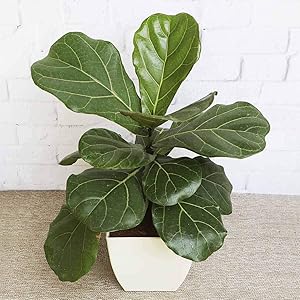
Fiddle leaf fig, also known as Ficus Lyrata is a beautiful indoor plant that can add an element of luxury and style to your home. It has fiddle-like leaves and dainty veins which is how the plant gets its name. With proper care, the plant can climb up to 7-8 feet or more in your home.
The broad leaves of the fiddle leaf makes it superbly efficient at purifying air and controlling humidity. Unlike most of the other indoor plants, fiddle leaf fig needs regular sunlight, so make sure you place it in a bright and sunny room.
Water
Water the plant thoroughly and allow the soil to dry out completely between watering. Make sure there is no sitting water and drain out any excess water from the saucer. This one also likes humidity in the air. If you happen to stay in drier parts, its best to invest in a good humidifier for this plant.
Soil
For fiddle leaf fig plants, use a rich and well-drained peaty soil. Also, try and re-pot the plant at least once a year because the roots become crowded over time and start growing through the drainage holes of the container which can, in turn, lead to circulation problems and cause the roots to rot. While repotting you can remove smaller roots(20% of total roots) to give more space for the main/thicker roots to grow.
Fertiliser
Throughout the growing season, you can feed the plant a water-soluble fertilizer to give the plant some much-needed boost.
3. Snake plant

Snake plant, also known as Sansevieria, that comes in a large number of varieties and is another air-purifying plant which is extremely easy to maintain. You can fit the plant anywhere in your house thanks to its low light tolerance.
The plant helps purify the surrounding air by absorbing indoor pollutants like xylene, formaldehyde, benzene, and toluene. The snake plant has a higher carbon dioxide absorption rate and is among a very few plants that can remove carbon dioxide even at night.
Watering
Snake plants do not mind being under-watered. Watering once in 1-2 weeks is generally a good frequency. They are primarily a succulent, evolved to grow in dry regions of the earth, so, make sure you don’t over water them and avoid getting the leaves wet.
Soil
Snake plants are more prone to rotting which is why it is best to put them in a well-draining soil mix so that there is adequate drainage. It’s also best to use a terracotta pot to ensure there isn’t any trapped water inside. You can use a bamboo or banana leaf basket to cover that ugly terracotta pot. Also, always pot such plants in a pot with drainage holes. If you are re-purposing a tin container or a ceramic mug to grow a plant, try and drill a couple of holes at the bottom to ensure good drainage.
Fertilizer
Fertilize the snake plant with some all-purpose plant food during the summers because that is when it needs nutrients the most.

4. Indian money plant

Money plant, also known as the golden pothos, is one of the most popular house plants mainly because of its incredible longevity and air purification qualities. It can effectively remove airborne pollutants such as formaldehyde, benzene, and xylene. However, this plant can be poisonous on consumption. It is best to hang it or keep it away from the reach of children and pets at home. A curtain rod or a high level floating shelf in a bright space of the house are great spots for hanging or keeping this plant.
Water
As opposed to common practice, it doesn’t need much watering. In fact, the plant won't last long if you constantly water it. That is why it’s best to water the plant only when the soil is completely dry. While watering any plant, always let the water drain out from the bottom of the pot. You can use drainage plates to collect this extra water.
Soil
While money plants can tolerate all soils, they grow best in loamy and fertile soil. You can also add some clay or sandy soil to improve the overall texture.
Fertilizer
Add the feed to your money plant every two-three months during the growing season. An all-purpose general plant feed would work well for the money plant.


Comments
Post a Comment